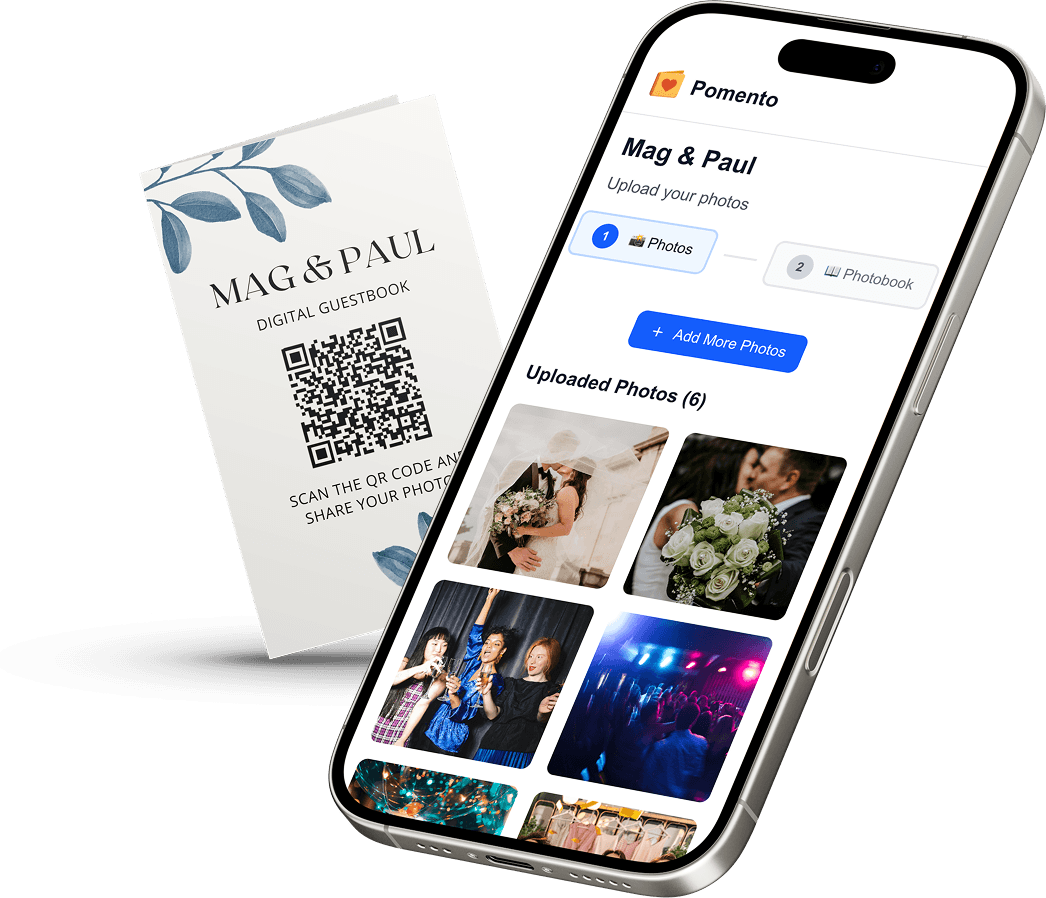
The easiest way to make a class memory book is to let everyone fill in their own piece of the story. Instead of one exhausted room parent or teacher chasing photos across email threads and parent group chats, students, families, and teachers each add their favorite snapshots, notes, and voice recordings to one shared project. With a collaborative memory platform like Pomento, everyone contributes through a single link or QR code—no app download or guest account needed—and those scattered classroom moments come together as a digital and printed photo book, a personalized class song with its own music video, and a live slideshow for the end-of-year party.
Key Takeaways
- Unlike a whole-school yearbook, a class memory book captures one specific classroom, team, or group.
- Give each student or family their own page so one organizer never has to lay out 25+ spreads alone.
- Pair candid photos and kids’ artwork with grade-appropriate prompts and short voice recordings.
- Start collecting two to three weeks before the last day of school using one no-app link or QR code.
Table of Contents
- Key Takeaways
- What a class memory book is
- Two kinds of class memory book
- What to put in a class memory book
- Page prompts that get children writing
- How to make a class memory book together
- Class memory book ideas by occasion
- Choose the format: digital, printed or both
- Preview and start your project
- FAQ
- Sources
- Recommended
What a class memory book is
A class memory book is a shared keepsake built around one specific group: a preschool room, a second-grade class, a fifth-grade homeroom, a theater cast, or a youth soccer team. It gathers the candid photos, drawings, quotes, and everyday stories that defined that group’s year, alongside a class roster so kids can look back years later and remember everyone who sat beside them.
The tradition goes back further than modern school portrait packages. According to scholar Amy J. Lueck, early twentieth-century school memory books were mostly blank, manufactured scrapbooks where classmates traded signatures, snapshots, and small souvenirs. Their popularity faded once school-wide yearbooks became standard across the country in the 1930s—yet the formal yearbook never quite replaced the closeness of a single classroom’s book.
Class memory book vs. yearbook
A school yearbook is an institutional production planned from autumn to spring to cover hundreds of portraits, clubs, sports teams, and administrators across every grade. Because it has to represent the entire school, each homeroom rarely gets more than a page or two.
A class memory book captures what a whole-school yearbook leaves out:
- Every child gets equal space. Quiet kids appear right alongside the students who ended up in assembly photos.
- It preserves the small rituals. The class pet, the rainy-day indoor recess game, the field trip bus sing-along, and the phrase the teacher repeated every Friday all make it onto the page.
- It comes together in two or three weeks. A room parent, teacher, or student leader can organize it near the end of a term as a class keepsake or a surprise thank-you gift.
- It captures real voices. A 15-second audio clip of a seven-year-old explaining their favorite science experiment—complete with missing-front-teeth pronunciation—is something paper alone cannot hold.
Two kinds of class memory book
Parents and teachers searching for a class memory book usually have one of two projects in mind, and deciding which one you are building saves hours of planning.
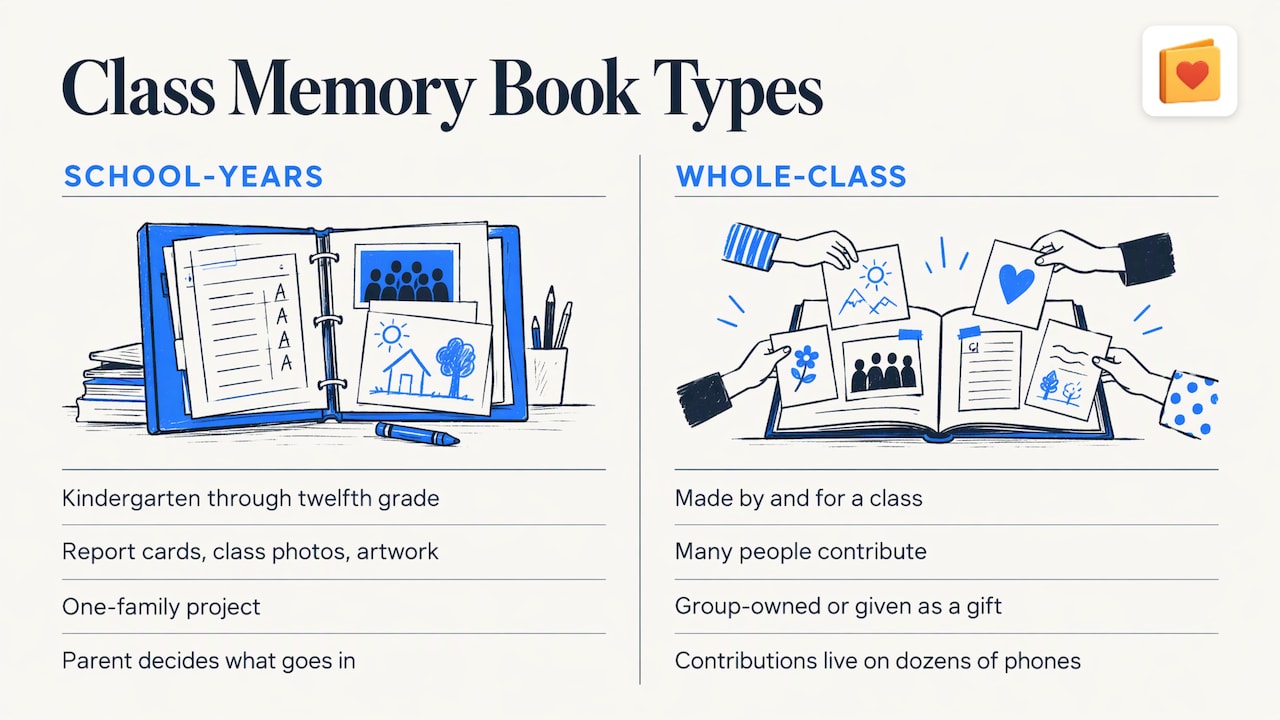
1. One child’s K–12 school-years book. A parent saves report cards, annual portraits, certificates, and standout artwork from preschool through high school graduation in a binder or archival album. One family curates everything at home. If that is the project on your table, our guide to preserving family memories walks through practical ways to sort and store school keepsakes year by year.
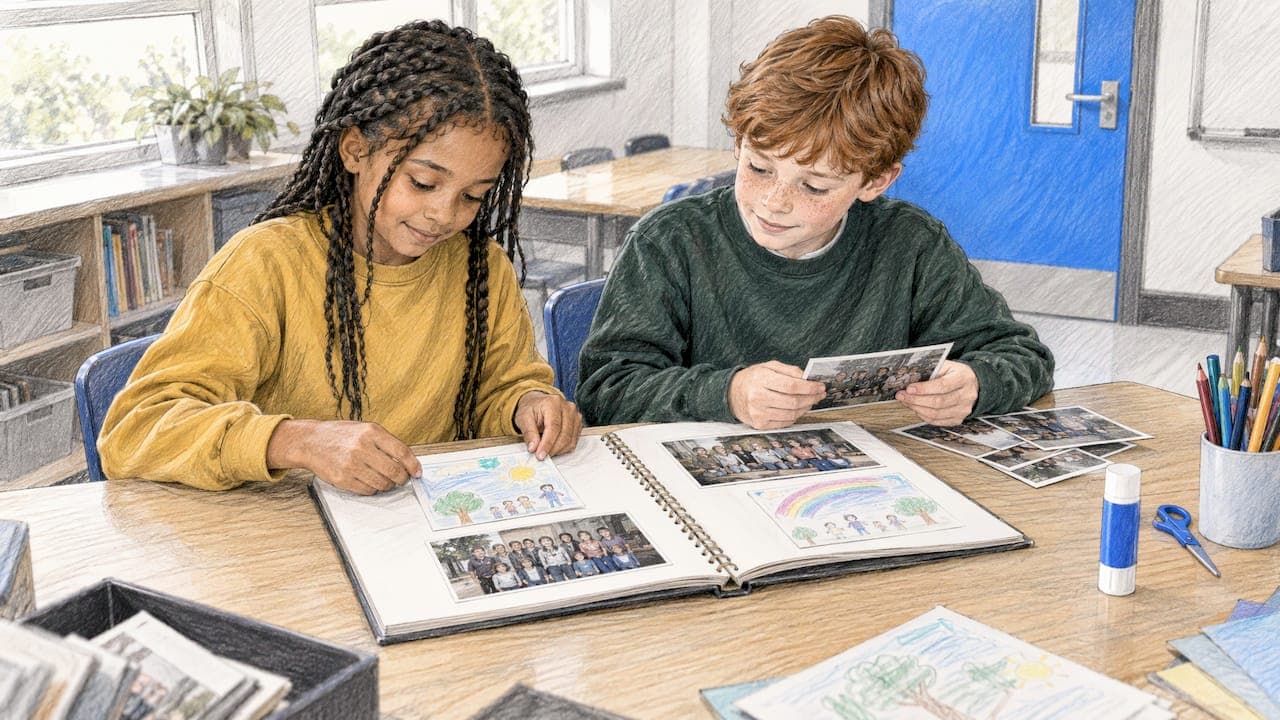
2. A collaborative book made by and for a whole class. Every student and family contributes a page, either as an end-of-year keepsake for the children or as a group thank-you gift for a teacher, daycare educator, or coach. Paper scrapbooks often stall here because photos sit on 25 different phones and families have wildly different schedules. Sharing a single digital collection link solves that bottleneck, and the rest of this guide focuses on how to run a group classroom book smoothly.
What to put in a class memory book
The best class memory books are not 200-page photo dumps. They work when every page feels distinctly human. Aim for this mix of ingredients:
- A welcome page. Include the teacher’s name, grade or room number, school year, and a short note explaining why the book was made.
- A group photo and first-name roster. Kids forget classmates’ names faster than parents expect. (For student privacy when sharing a digital link across households, stick to first names and last initials rather than full contact details, and double-check your school’s photo-sharing guidelines.)
- Candid moments from the year. Field trips, pajama day, science fair projects, the 100th day of school, or reading on the rug. Action shots feel warmer than stiffly posed rows.
- Unedited words from each child. One or two sentences in a child’s actual phrasing beat a polished paragraph rewritten by a parent.
- Notes from parents and caregivers. For a teacher gift, ask parents to share something their child talked about at the dinner table because of that class.
- Short voice messages. Hearing each student say “Thank you, Ms. Rivera!” or tell their favorite joke from the school year turns a digital page into a living time capsule.
- Photographed artwork and handwritten notes. Lay drawings, poems, or clay projects flat near a bright window and snap a photo so bulky paper never has to be glued into a binder.
- A closing letter from the teacher. Even in a student-focused end-of-year book, a short send-off note or voice recording from the teacher anchors the whole collection.
Page prompts that get children writing
Asking families to “write a message for the class book” usually produces procrastination. Specific, age-matched questions get instant answers. Education nonprofit GreatSchools suggests grade-specific prompts—starting with simple questions like “Who was your teacher?” in kindergarten, “What was something difficult to learn?” in first grade, favorite first chapter books in second grade, and proudest accomplishments by fifth grade.
You can copy and paste the prompts below straight into your class email or parent chat based on your group’s age:
Preschool & kindergarten (great for voice messages or parent dictation)
- My favorite corner, toy, or game in our classroom was…
- Something funny that made our whole class laugh was…
- My favorite story or song our teacher shared with us is…
- When I grow up, I want to be…
Grades 1–3
- My favorite day in class this year was… because…
- Something tricky I learned how to do this year was…
- The best part of our field trip (or recess) was…
- One thing our teacher always says that makes me smile is…
Grades 4–8, teams & clubs
- One thing I learned this year that genuinely surprised me…
- An inside joke only our class (or team) would understand…
- My best piece of advice for next year’s students in this room…
- Three words I would use to describe our group this year…
Prompts for a teacher thank-you gift
- For students: Thank you for helping me when… / My favorite lesson you taught us was…
- For parents: One moment we noticed our child grow this year because of your classroom…
How to make a class memory book together
Here is a realistic step-by-step plan—and how to avoid the bottlenecks that usually derail room parents in May and June.
1. Pick one organizer and a firm deadline
Have one room parent, teacher, or student representative lead the project. Give families 10 to 14 days to contribute, setting your deadline two to three weeks before the end-of-year party or last day of school so there is breathing room for stragglers and printing.
2. Collect everything through one link or QR code
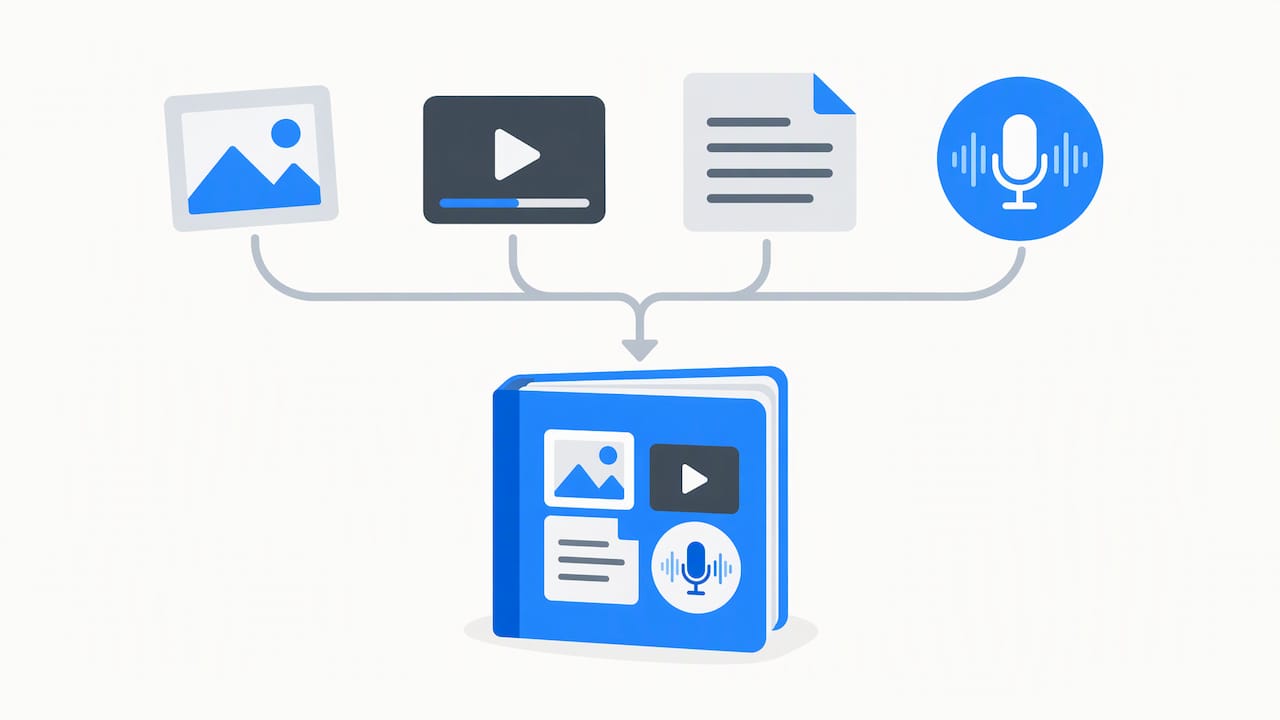
Class projects usually fall apart when photos trickle in across texts, WhatsApp, and email attachments at tiny resolutions. In Pomento, you share one invite link or printable QR code card. Families open it directly in their phone, tablet, or computer browser—with no app download and no account registration required—and upload full-resolution photos (up to 50 MB), videos, written answers, and browser-recorded voice messages for free.
Practical tip: paste the invite link into the class newsletter or parent chat, and tape the printable QR code card next to the pickup door, classroom cubbies, or spring open-house sign-in sheet so parents can scan it while waiting. If the book is a secret thank-you gift for the teacher, share the link strictly in the parent-only group ahead of time.
3. Let each family design their own page (while keeping editorial control)
Laying out 25 student spreads from scratch is the second reason organizers burn out. Pomento offers two flexible collaboration modes: “Each person gets their own page”—where every student or family picks from 18+ clean layout templates to arrange their own photos, prompt answers, and voice note—or “Everyone works together” in one shared album for smaller groups. As the organizer, you always keep full editorial control to reorder pages, fix typos, or quickly add a page from field-trip photos so no child is ever left out.
4. Send one low-pressure reminder
Five days before the cutoff, send a short reminder that includes two sample prompts right in the message. Reassure busy parents that one photo plus two sentences—or a 15-second voice note recorded at the breakfast table—takes less than three minutes.
5. Turn the pages into a photo book, custom song, and slideshow
Once contributions are in, Pomento brings everything together into a complete set of classroom keepsakes:
- Interactive Digital Photo Book: Easy to share via link with every family in the class, plus downloadable as an offline archive.
- Printed Photo Book: A professionally bound book (40 pages included and expandable up to 500 pages, with a softcover included in the print package, an optional hardcover upgrade, custom cover photo, and free worldwide standard shipping). You do not need all photos or a shipping address when starting—collect memories first and order printing only when the book is finished.
- Personalized Song & Music Video: Pomento turns the students’ and parents’ real written messages into custom song lyrics in your chosen music style, paired automatically with your class photos in an MP4 music video. Because lyrics are 100% editable before final production, you can make sure the teacher’s name, class mascot, and favorite inside jokes fit just right.
- Live Event Slideshow & Original Files: Display pages and incoming snapshots on a classroom smartboard or projector during the party, and download every original full-resolution photo, video, and voice message.
6. Present it together
At the end-of-year celebration or cast party, run the live slideshow on screen, gather the kids on the rug to play the custom class song and music video, and hand the printed photo book to the teacher. Afterward, email the digital book link to every household so every child—and grandparents far away—can flip through the pages and replay the voices at home.
Class memory book ideas by occasion
End-of-year classroom keepsake. Give each student a dedicated page alongside field-trip highlights and a closing letter from the teacher. Keep the printed copy in the classroom library or gift it to the teacher, while every family keeps the interactive digital edition.
Group thank-you gift for a teacher, educator, or coach. Twenty-five personal thank-you notes, kids’ drawings, and recorded voices mean far more to a teacher or daycare educator than another coffee mug or gift card—and families can participate without anyone collecting cash.
Moving-up ceremonies and graduation. For fifth-grade promotion, eighth-grade moving up, or high school graduation, relatives and teachers can add favorite throwback photos and future advice via QR code. Browse our graduation memory book ideas for 12 creative angles.
A teacher’s retirement or farewell. Invite current families, fellow staff, and former students from past years to contribute pages from anywhere in the world. Our retirement memory book guide shares helpful wording ideas for colleagues and parents.
Team seasons and milestone celebrations. Youth sports teams, choir groups, theater casts, and family milestone birthdays work the exact same way—explore all occasions for more group gift inspiration.
Choose the format: digital, printed or both
A digital class book solves the biggest classroom budget headache: every family gets the full interactive book—complete with audio clips, video messages, and the class music video—without buying 25 separate printed copies. If you want a closer look at how online editions work, read our guide to making a digital memory book.
A physical printed book, meanwhile, belongs on a teacher’s desk or a family bookshelf where kids can pull it down years later without needing a screen or charger. To keep bound keepsakes intact for decades, the Library of Congress recommends storing bound albums upright on a shelf with similar-sized volumes away from direct sunlight and damp basements.
For most classes, combining both formats hits the sweet spot: one printed softcover or upgraded hardcover book to unwrap in person, plus a shareable digital link for every student’s family to keep.
Preview and start your project
You can try Pomento and preview your digital photo book link for free before deciding on a package. When you are ready to unlock full features, choose between the Digital Experience and the Digital + Printed Book package—each a simple one-time payment per project with no subscription and no hidden fees, backed by a 14-day money-back guarantee.
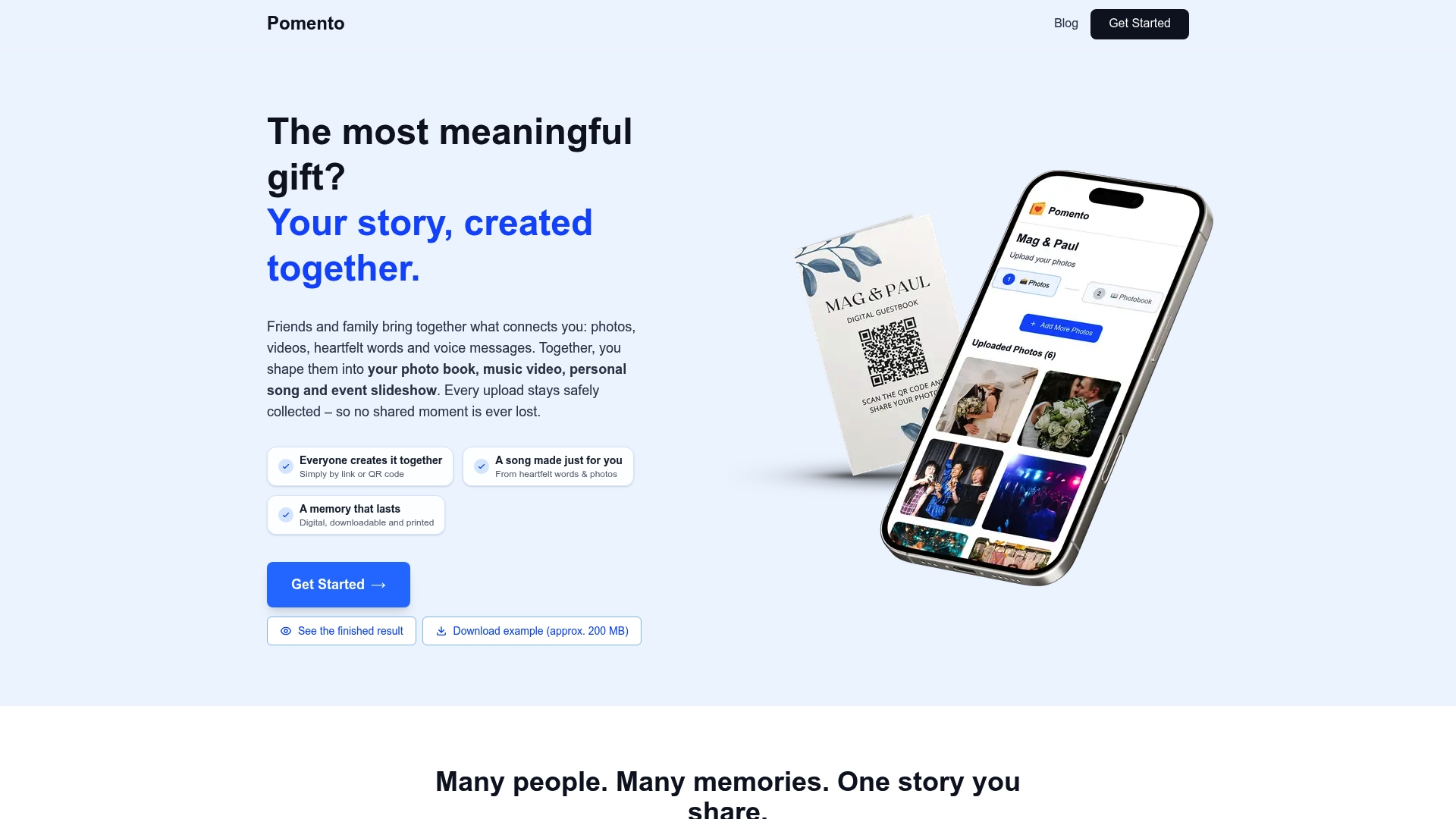
When you are ready to gather your group’s memories, start your own project on Pomento: share one link or QR code with families, skip app downloads and guest sign-ups, and let every student and parent build a page they will be proud to look back on.
FAQ
Is a class memory book the same as a yearbook?
No. A yearbook covers an entire school and takes a dedicated staff months to produce. A class memory book focuses on one classroom, team, or club, can be created in two to three weeks by parents or teachers, and captures personal details a yearbook misses—like inside jokes, children’s artwork, and recorded voice messages.
When should we start collecting for an end-of-year book?
Start three to four weeks before the last day of school or class party, giving families 10 to 14 days to submit their pages. That leaves comfortable time to review layouts and order your printed book if you want to hand it over in person—or you can keep collecting right through the class party and order the printed copy afterward.
What if some parents are not comfortable with technology?
Families only need to tap a link or scan a QR code in their normal phone or computer browser—no app download, account, or password is required, and contributing is free for guests. Parents can also tap the microphone button so young children can record a quick voice message in seconds instead of typing.
Can the organizer add or edit pages if a family misses the deadline?
Yes. The organizer keeps full editorial control over the project, so a room parent or teacher can fix typos, rearrange spreads, or build a quick photo page from classroom snapshots to make sure every child in the roster is included before printing.
How can every family get a copy without buying 25 printed books?
Order one printed photo book as the physical gift for the teacher or classroom shelf, and share the interactive digital photo book link with every parent in the class at no extra per-family cost. Families can view all pages, listen to voice clips, watch the custom music video, and save memories offline.
Sources
- Amy J. Lueck, “Classbook Sense”: Genre and Girls’ School Yearbooks, Santa Clara University
- Create an elementary school memory book, GreatSchools
- Scrapbooks and Albums, Collections Care, Library of Congress