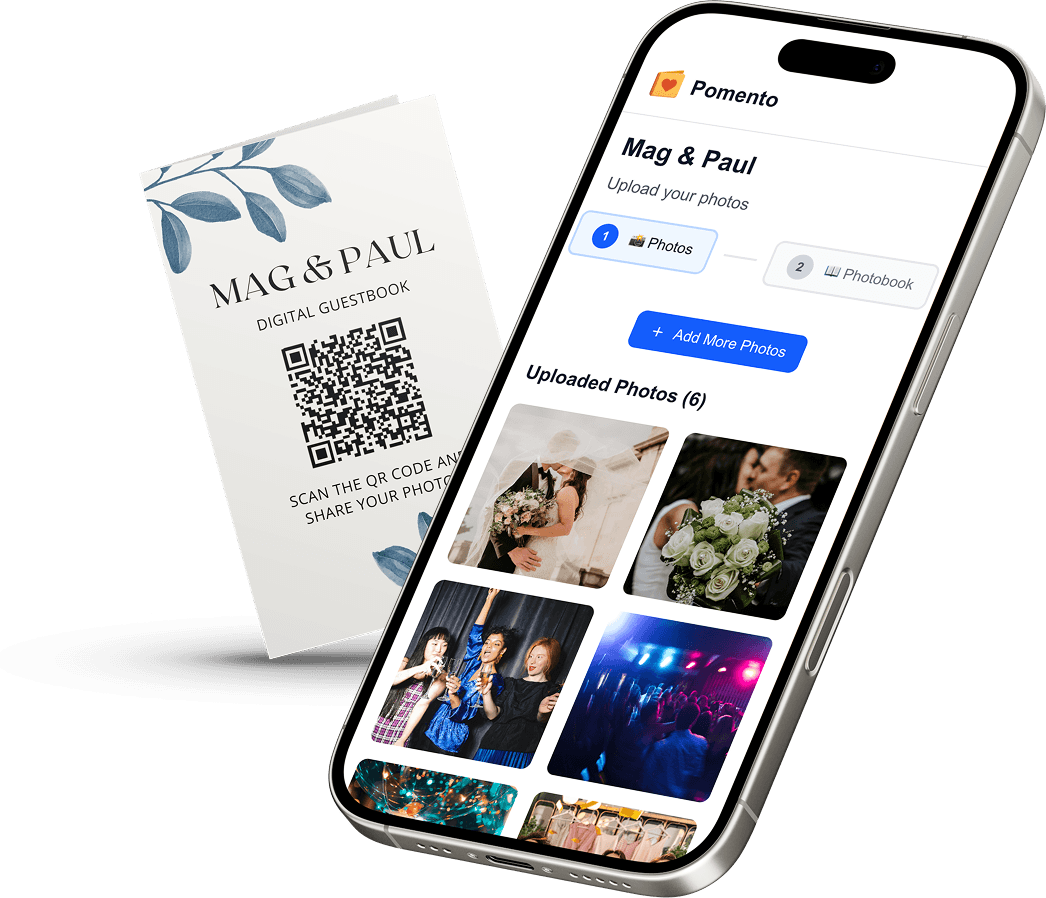
The best 60th birthday keepsake is one made of people: photos from every decade, written messages and recorded voices, all gathered in one place and bound into a book. An engraved object says “happy 60th.” A book of what 40 people said about them gets reread on bad days and shown to grandchildren. Pomento is an all-in-one collaborative memory platform and digital guestbook for weddings, birthdays, baptisms, memorials, farewells and company events. Its idea is to collect everyone’s memories in one place instead of scattered across phones and group chats, and turn them into a gift you can see, hear and hold. For a 60th, that means a birthday memory book that works as a surprise gift before the party and a live guestbook during it.
Key Takeaways
- A 60th keepsake lands hardest when it is specific: real stories, real photos and real voices from people across the recipient’s life.
- Collecting is the hard part. One link or QR code, with no app and no sign-up for guests, removes the usual reasons people never send anything.
- Aim for a story, not a dump: roughly 60 to 80 photos across six decades, grouped by era, with short captions.
- Start three to four weeks ahead if you want a printed hardcover in hand before the party.
- Pomento’s Digital Experience is $48 and the Digital + Printed Book is $87, both one-time payments with a 14-day money-back guarantee.
Table of Contents
- Key Takeaways
- Why a keepsake made of people beats a keepsake made of metal
- What a 60th birthday keepsake can contain
- How to collect memories without chasing people
- Milestone birthday messages: what to write
- What to put in a 60th birthday photo book
- Choose the format that fits the person
- Presenting it
- Pomento for a 60th birthday
- A simple timeline for the organizer
- Common mistakes to avoid
- FAQ
- Sources
- Recommended
Why a keepsake made of people beats a keepsake made of metal
Sixty is one of those birthdays people feel the weight of, even when they pretend not to. Plenty of gift lists for it lean on engraved glasses, personalized journals and wooden boxes. Those are fine. But a 60th is the moment when family and friends have the most history to draw on, and the most to say.
One idea from Oprah Daily’s 60th birthday gift roundup shows the principle: ask family and friends for their own reasons for loving the birthday person, collect 60 of them, and gather them in a keepsake book. The gift is not the book. It is the evidence that sixty years of a life mattered to this many people.
That is also why price is a poor guide. A small gift tied to one real memory usually beats an expensive generic one. A message that says “the cabin, summer 1994, you carried me back to the car when I sprained my ankle” does more than “Happy 60th, Dave.” Specificity is the whole game.
If the birthday also coincides with retirement, you may want a separate pile of practical presents too. A shared list of gift registry ideas can keep those from overlapping. The memory book is the part nobody can duplicate.
What a 60th birthday keepsake can contain
Think in layers. Each one captures something a single photo album cannot.
Photos. Not only the recipient’s own albums. Cousins, old coworkers and college friends hold pictures the family has never seen.
Written messages. Short, honest and specific beats long and polished. Two or three paragraphs is plenty.
Voice messages. A grandchild’s giggle, a brother’s slightly cracked voice, an old friend telling a story. Text cannot do this, and it becomes more valuable every year.
Video. Short clips work well. If you want ideas and scripts for them, see our guide to birthday video messages.
A printed book. Something they can hold, leave on a coffee table and hand to a child.
A song. A personalized song written from the guests’ own words is the part people don’t expect, and it often gets the strongest reaction at the table.
Pomento puts these together on purpose. It creates a printed and digital photo book, a personalized song built from guests’ words, a music video made from your photos, and an event slideshow for a screen or projector at the celebration. You are not left with a folder of files to figure out yourself.
How to collect memories without chasing people
Most group keepsake projects fail at the same point: the organizer sends a hopeful message to 40 people and gets six replies, half of them as blurry screenshots. Here is a routine that works, with where each step usually goes wrong.
1. Build the guest list by era
Write names in columns: childhood, school years, early career, family life, recent years. A good 60th book mixes eras, so you want the old friend and the newest neighbor. Where it goes wrong: only inviting family, which makes the book feel narrow.
2. Pick one way to contribute
Give everyone a single destination. Email attachments, text threads and shared folders each fail in their own way: files get lost, formats clash, older relatives get stuck on logins. With Pomento, the host shares one QR code or link. Guests need no app installation and no sign-up. They upload photos, videos, written messages and voice messages from any phone or computer.
3. Send a specific ask
A vague “send memories!” gets vague results. Ask for one photo and one story. Prompts help a lot:
- “One thing you taught me that I still use is…”
- “My favorite story about you is…”
- “The moment I realized how much you mattered to me was…”
- “Send one photo of the two of us, any year.”
Tell people a few sentences is enough. Voice notes are often easiest for guests who dislike writing.
4. Let each guest make their own page
The layout is where organizers usually burn their weekends. In Pomento, each guest creates their own photo book page with their photos, words and voice message, using ready-made templates in just a few taps. You never open a design tool, and nobody’s contribution gets squeezed into a corner.
5. Remind twice, then close
Set a clear deadline, send one reminder midway and one the last two days. Most contributions arrive after the second nudge. Where it goes wrong: leaving the deadline open, which drags the project into the week of the party.
6. Keep it secret
Share the link only with guests, and ask them not to mention it around the birthday person. A surprise is part of the gift. The project works as a shared surprise before the event, then as a live guestbook during the celebration.
Milestone birthday messages: what to write
Guests are often stuck on the words, not the logistics. Give them a framework and the stories come easily.
Start with one memory. Pick a single moment, not a summary of someone’s life. Where were you, what happened, what did they do or say?
Say what it taught you. “You taught me to…” turns a memory into a tribute.
Mention the number lightly. “Sixty years of you, and the world is better for it” is the kind of line that works. A nod to the milestone is enough, so skip the age jokes unless the person loves them.
Match the voice to the relationship. Here are starting points by relationship:
| Who is writing | Angle that works |
|---|---|
| Spouse or partner | A small daily thing you would miss, and one trip or moment you’d relive |
| Adult child | What you only understood as an adult, a lesson that stuck |
| Grandchild | What they do together, a nickname, a favorite recipe or game |
| Old friend | The story only the two of you know, told in two or three sentences |
| Coworker | The time they helped, or a way they made work better |
| Sibling | A childhood memory, with honest affection and a little teasing |
Keep it short. A paragraph or two beats a page. If the writer is more comfortable talking, a 30-second voice message often carries more feeling than polished prose.
For a few examples of tone: “Thank you for every time you showed up without being asked” is better than “You are a wonderful person.” The first is something only that writer could say.
What to put in a 60th birthday photo book
A photo book from a group has an advantage over a solo project: it already contains many voices. Your job is to give it a shape.
Choose 60 to 80 photos for the whole life, not 300. The aim is a story, not an archive. If you have more, keep them as downloadable originals. Pomento also provides downloads of all original photos, videos and voice messages, so nothing gets lost when you edit the book down.
Order by decade. Chronological order is simple and everyone understands it. Group the 1970s, 1980s and so on, or childhood, young adulthood, family years and now.
Caption the year or age. If nobody knows an exact date, “around 1985” is fine. Ask relatives to help identify people in old pictures and mark guesses as guesses.
Pair then and now. A childhood photo beside a recent snapshot of them doing the same thing, whether fishing, cooking or laughing at the camera, tells the story faster than a paragraph.
Add small “facts about you” pages. Favorite comfort meal, the phrase they repeat most, the song that makes them sing, the best advice they give. These are cheap to collect and often the pages people read first.
Leave white space. A crowded page makes a book feel like a scrapbook dump. A full-page photo of the best moment, with a short caption, does more.
End on the party. Close with the birthday gathering, or a page for notes from the guests who attended. For more layout ideas, see our guide to birthday photo books.
Choose the format that fits the person
Not every 60-year-old wants the same thing. Match the keepsake to how they actually live.
- For someone sentimental and private: a printed hardcover they can read alone, with voice messages saved digitally to play when they want.
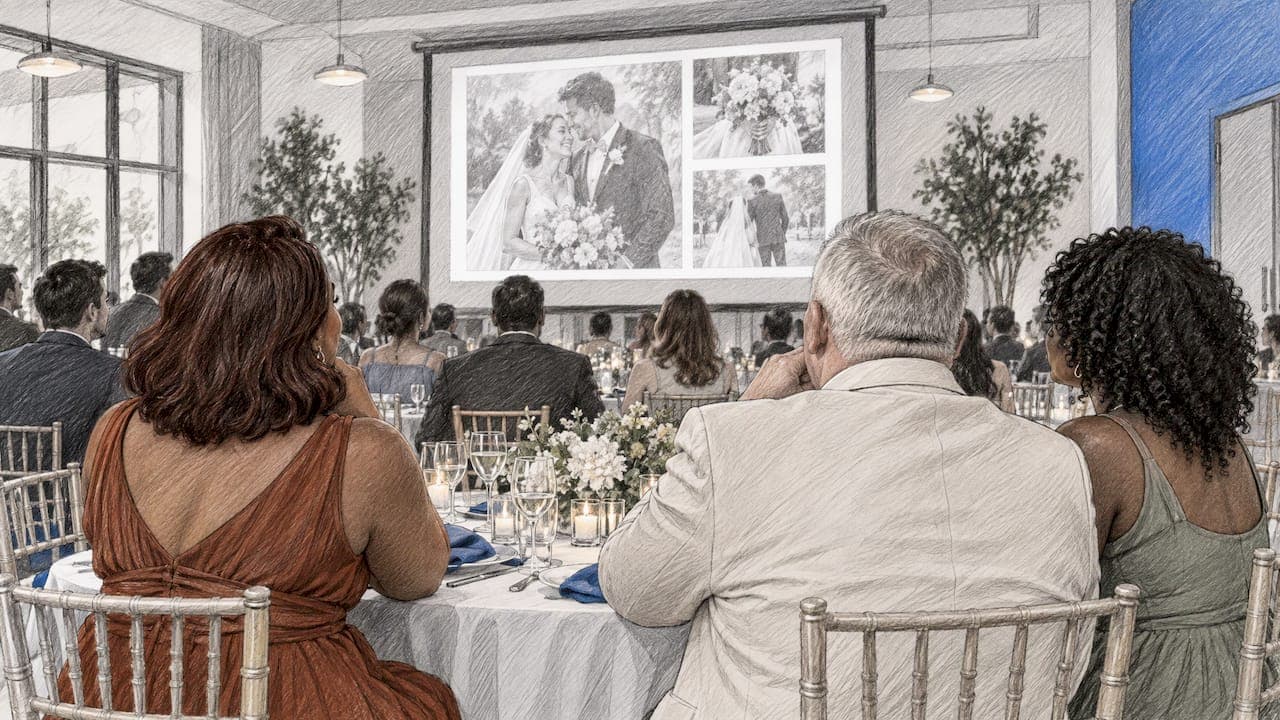
- For someone who loves a crowd: a live slideshow at the party, with guests scanning the QR code on the spot and adding photos from that night.
- For a recipient who lives far from family: the digital book, which can be shared online with relatives who cannot attend.
- For someone who is retiring this year as well: combine the milestone with colleagues’ messages. Our retirement memory book guide shows how to blend both.
- For the person who says they want nothing: this is usually where a book of messages wins. It asks nothing of them but to read.
Presenting it
Timing changes how the gift feels. Some organizers hand over the book a day or two before the party, so the recipient can read everything privately, cry in peace and arrive composed. Others reveal it at the party, with the slideshow running behind. Both work. The choice depends on whether the person would rather feel it alone or in the room.
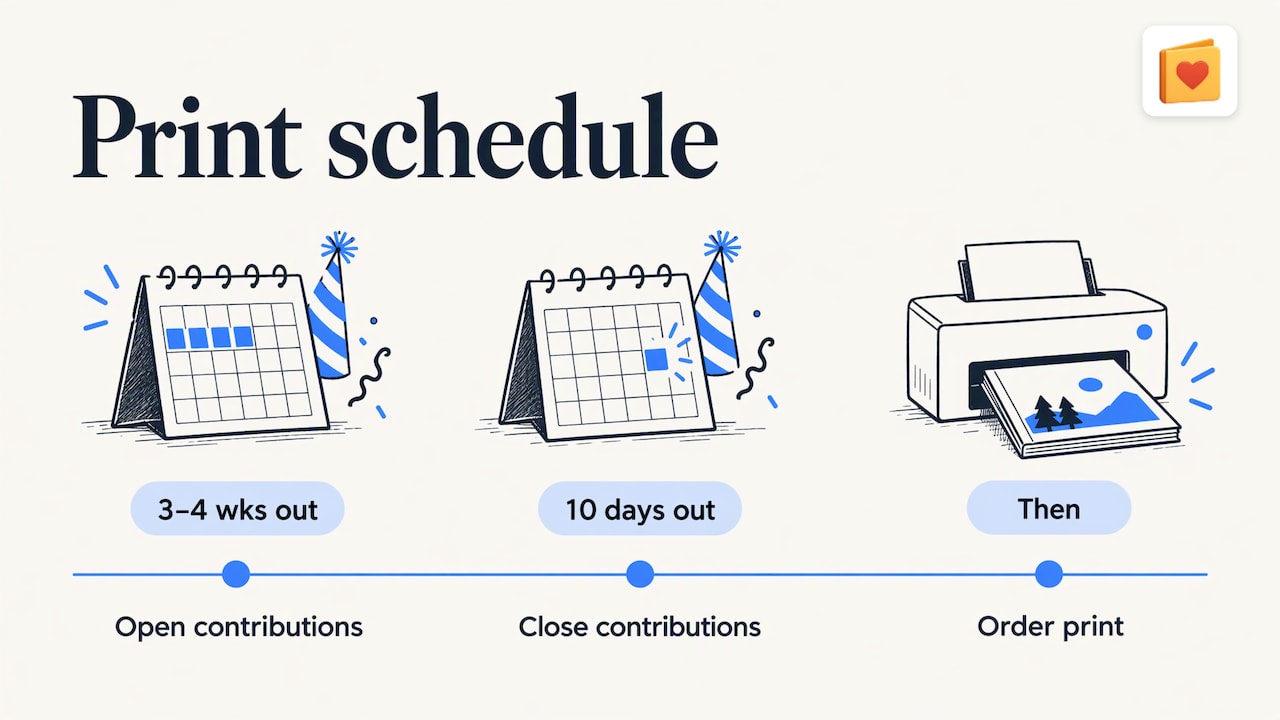
If you are printing, leave room for production and shipping. A comfortable plan is to open contributions three to four weeks before the party, close them about ten days out, and order the print then. Rushing the final days is what makes organizers panic.
Put the book on display at the party if you can. Contributors love finding their own page, and reading others’ pages often starts the best conversations of the evening.

Pomento for a 60th birthday
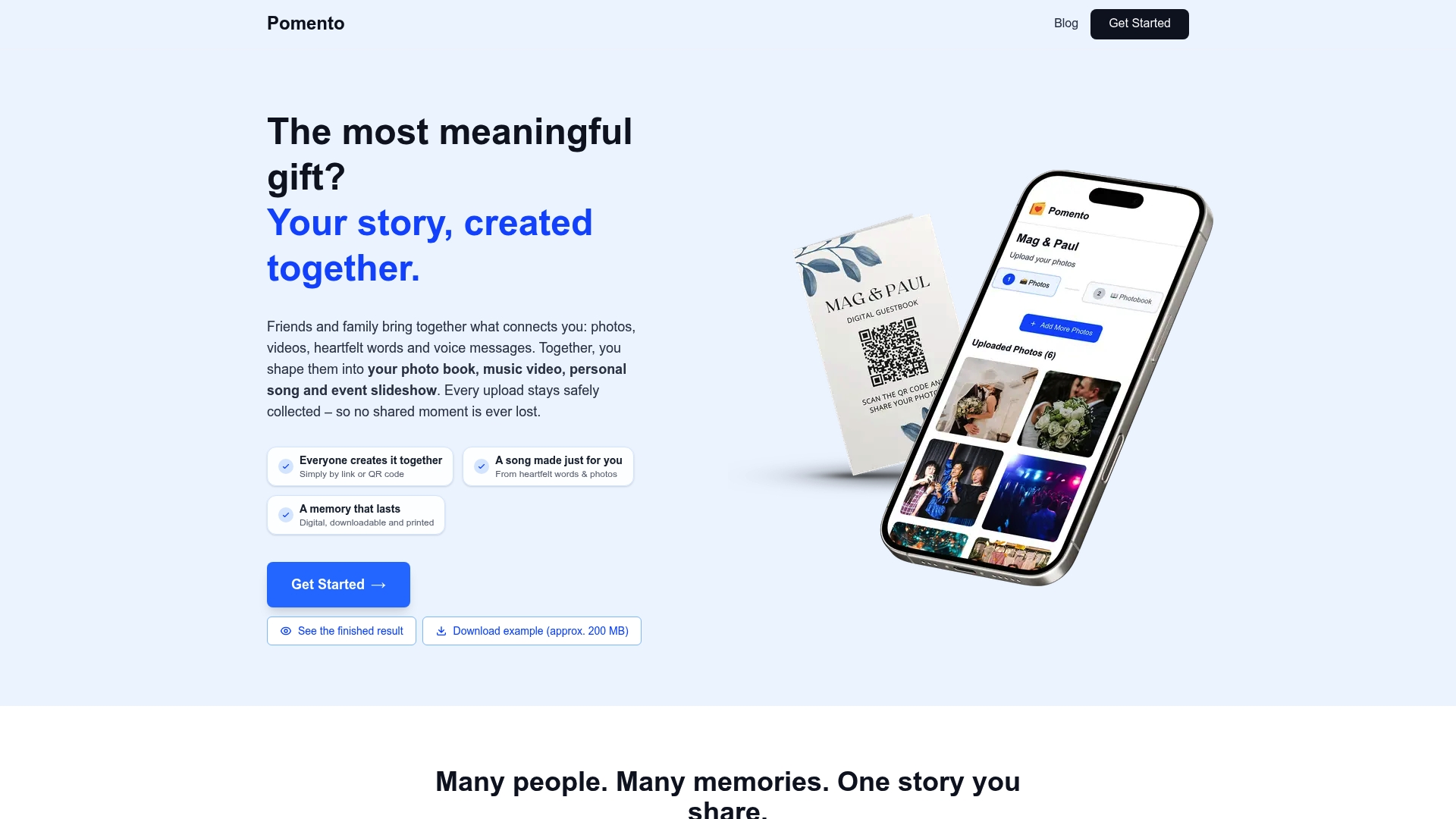
With Pomento, you share a single link or QR code and guests add photos, videos, written messages and voice messages from any phone or computer, with no app and no sign-up. Each guest then builds their own photo book page from ready-made templates. Pomento brings those pages together into an interactive digital book and a high-quality printed hardcover shipped to your door, a personalized song with its own music video, a live event slideshow for screens and projectors, and downloads of every original file.
The Digital Experience costs $48 and the Digital + Printed Book costs $87, both one-time payments with no subscription. Every purchase comes with a 14-day money-back guarantee. You can preview a real example photo book first, then start your own project.
If the birthday is one of several occasions you are planning this year, you can see the other occasions Pomento covers too.
A simple timeline for the organizer
Here is a worked example for a party on a Saturday.
| When | What you do |
|---|---|
| 5 weeks before | Write the guest list by era, set up the project, share the link privately |
| 4 weeks before | Send the first ask with two prompts and a deadline |
| 3 weeks before | Reminder one, add your own photos and a few older ones from relatives |
| 2 weeks before | Reminder two, personally nudge the five people whose stories matter most |
| 10 days before | Close contributions, check pages and captions |
| 7 days before | Order the printed book |
| Party day | Run the slideshow, share the QR code for live photos |
It looks like a lot on paper, but the organizer’s actual work is the nudging. The collecting and layout take care of themselves.
Common mistakes to avoid
- Asking for “memories” with no prompt. People freeze. Give them a sentence to finish.
- Only inviting the closest circle. The surprising contributions come from the person who knew them at 19.
- Skipping the spellings and dates. Check names and years before printing, since mistakes in a printed book stay.
- Making it about the age. The number is the occasion. The person is the point.
- Starting late. The best books are never rushed. Start earlier than you think you need to.
FAQ
What is a good keepsake for a 60th birthday?
A book of photos, messages and voice recordings from family and friends is among the most lasting choices, because it holds stories no store can sell. Pomento turns guest contributions into a digital and printed photo book, a personalized song and music video, and a live slideshow.
How many photos should a 60th birthday photo book have?
About 60 to 80 photos across the whole life is a good range, grouped by decade with a short caption on each spread. More than that and the book starts to feel like a dump rather than a story. Keep extras in the downloadable originals.
What should I write in a 60th birthday message?
Pick one specific memory and say what it taught you or what it meant. Keep it to a few sentences, and mention the milestone lightly. A line like “Thank you for every time you showed up without being asked” beats a generic wish.
Do guests need an account or an app to contribute?
No. Guests use one QR code or link, with no app installation and no sign-up. They can upload photos, videos, written messages and voice messages from any phone or computer.
When should I start a 60th birthday memory book?
About four to five weeks before the party if you want a printed hardcover. That leaves time to collect, remind, close contributions and order the print. A digital-only book can come together faster.